Let me just say I am loving today’s trailer line-up! Lots of things to get you through these dog days of summer heat and a few to get you ready for Fall and Winter! Nothing like having a few shows to binge while staying cool!
So let’s see what’s on deck, check out the latest trailers below:
Full Circle (Streaming on Max July 13th)
Special Op: Lioness (Streaming on Paramount Plus July 23rd)
Season 3-Reservation Dogs (Streaming on Hulu August 2nd)
Poisoned: The Dirty Truth About Your Food (Streaming on Netflix August 2nd)
So it is nothing like having good friends who keep you posted on new goodies that are dropping within the pop culture arena! While preparing for our weekly writing session, my colleague and friend Michael Hall shared with me a new Disney+ animated anthology series that dropped last week called Kizazi Moto: Generation Fire! Immediately I did a quick Google search and to my delight, I was hooked! Premiering on July 5th Kizazi Moto: Generation Fire is a new series that blends elements of Africanfuturism, Afrofuturism, cyberpunk, sci-fi, and fantasy to tell 10 inclusive stories of African histories and cultures.
“This is Africa as you’ve never seen it before.” Advanced technology, spirits, aliens, and time travel…SIGN ME UP!!
Produced by Triggerfish Animation Studios and Walt Disney Animation Studios, executive produced by Oscar-winning director Peter Ramsey (Spider-Man: Into the Spider-Verse, Rise of the Guardians) with Tendayi Nyeke and Anthony Silverston as supervising producers, Kizazi Moto: Generation Fire is what Ramsey describes as a series with “recognizable genres and recognizable aspects of contemporary culture, but they’re wrapped in African culture.”You got my attention! Plus the representation of the African diaspora is in full effect, with stories from such countries as South Africa, Egypt, Kenya, Nigeria, Uganda, and Zimbabwe…GAME CHANGER!!
With a cast that includes Florence Kasumba (Black Panther: Wakanda Forever, Captain America: Civil War, Wonder Woman, “Emerald City”), Kehinde Bankole (“Desperate Housewives Africa”, Blood Sisters), Nasty C (“Blood & Water”), Mo Ismail (“Star Trek Beyond”, ) and a plethora of up-and-coming African talent, Kizazi Moto: Generation Fire is definitely gonna change the game of how we tell animated stories!!
Now while I have not watched the series as of yet, I am already convinced this is legit greatness right here!! Just going off the trailer, the diverse representation, vibrant animation still shots, the voice cast, and the series direction, I’m willing to put my money on it sight unseen!
Photo Credit: Disney
This is totally in my personal and professional wheelhouse!! I am loving that more diverse African stories are being told and shared!! Cause trust me that content has and is there, the whole world just needs to see it!!
And just in case you need a little more convincing see the trailer below:
I am totally hyped about this series and siked that ALL episodes are available to watch!
I know what I will be binging on tonight!!
Hit me up in the comments and let me know what you think!!
Before I let (you) go (nod to Frankie Beverly & Maze), let me leave you with a few reminders and nuggets that can give you your perfect dose of #BlackJoy!!
Black Joy is a movement of celebration! It’s what John Blake (CNN Enterprise writer/producer) calls ‘trauma-free Blackness!’
Black joy as an act of resistance is healing!
Black joy is global and open to all! As noted by author Sophie Williams, “Read books about Black and brown people living, not just dying. Engage in content where they thrive, rather than just survive. Remembering the full and complex range of lives and emotions in marginalized people is humanizing, and a lot of fun. You’ll feel better for it.”
Today’s #BlackJoyMoment is a mixtape of #BlackJoy resources!!
A Beautiful Resistance. … A collection of short films, long-form stories, and Q&As that celebrate Black Joy, Black dreams, and Black living.
Museum of Black Joy… A borderless exhibition and interactive archive of non-traumatic Black life in Philadelphia and beyond. It utilizes the traditions of storytelling and emerging technologies to acknowledge and advance experiences rooted in Black joy.
Reckon-Black Joy … Energize your mind, body, and spirit every Monday and Friday with a newsletter highlighting stories of Black liberation from across the nation.
The Black Joy Project … A worldwide movement of healing, community building, and resistance curated by Kleaver Cruz
BlackQueerJoy … A curated IG page that showcases images of Black LGBTQ+ people around the world in moments of pure joy.
Blavity … A site that posts daily uplifting news and commentary.
Black joy isn’t about erasing the difficulties of the Black experience, but showing the whole truth by creating balance. ~Kleaver Cruz
Photo by Henri Mathieu-Saint-Laurent on Pexels.com
Welcome back to our final Wednesday edition of #JoyfulBlackSpaces with guest blogger, Lauren N. Jackson!!
What are Black spaces? As a reminder, Black spaces are intentional spaces and environments designed to uplift and empower the Black community. These spaces bring JOY because they allow Blacks to rid themselves of the daily microaggressions, racism, and prejudices often experienced in society, and allow them to fully embrace their Blackness; their uniqueness, dialect, identity, and culture. Black spaces include spaces like higher education institutions, restaurants, churches, museums, and the like.
Today’s #BlackJoy moment we will focus on “Black Spaces in Movement”.
“I wanted to do the kind of dance that could be done for the man on the streets, the people. I wanted to show Black people that they could come down to these concert halls. That it was part of their culture being done there. And that it was universal.” – Alvin Ailey
It’s no secret that “every genre of dance has roots in Black culture and specifically African dance. From streets in the Bronx, where DJ Kool Herc grew the popularity of HipHop, to international stages and studios, where the likes of Misty Copeland and Alvin Ailey performed ballet and modern genres, the influence of Black culture can be seen from every angle of the dance world”
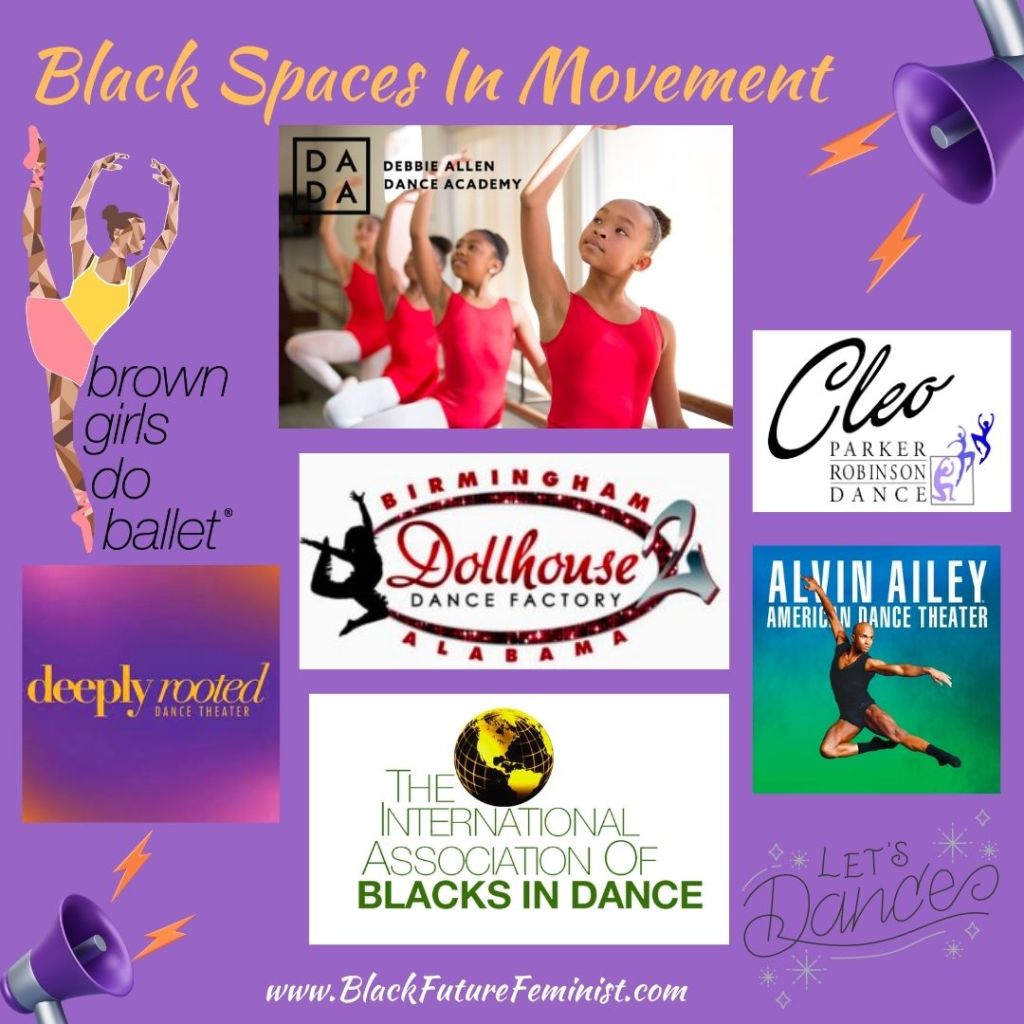
Celebrating and highlighting Black spaces in movement is an important way to recognize and appreciate the contributions and creativity of the Black community. I have highlighted “Black Spaces in Movement” that continuously celebrate and uplift the contributions of the Black community in dance. These spaces provide opportunities for Black dancers to showcase their talent, receive training and mentorship, and create a supportive community. They also serve as platforms to challenge the underrepresentation of Black dancers in mainstream dance and create spaces where Black artistry is valued and celebrated.
The Debbie Allen Dance Academy – The Debbie Allen Dance Academy is a “501(c)3 non-profit organization that offers a comprehensive dance curriculum to students ages four and up.” The Academy, known for its Hot Chocolate Nutcracker, has offered opportunities for students, mainly those from underrepresented groups to create opportunities, provide resources, and foster an inclusive environment to excel and thrive. Learn more hereand check them out on IG: @officialdadance
Dollhouse Dance Factory – The Dollhouse Dance Factory located in Jackson, MS, and established by Diana Williams, “promotes high self-esteem, determination, persistence, high academic achievement, community involvement and the importance of health in young women through the art of dance.” Their award-winning dance routines and participation in TLC’s hit show, “Bring It!” have brought recognition to their passionate and advanced dance skills, showcasing the excellence within the Black dance community. Visit the DDF site here and check them out on IG: @thedd4lbrand
HBCU Dance Teams – Historically Black Colleges and Universities (HBCU) dance teams are another important aspect of Black spaces in movement. These teams represent the spirit and tradition of HBCUs through their dance performances, embodying the excellence and artistry of the Black community. They showcase their talent at various events, competitions, and halftime shows, bringing the energy and vibrancy of Black dance to a broader audience. These groups have also built opportunities for members to build lifelong relationships through their sisterhood.
Check out the following HBCU dance teams’ routines:
NC A&T’s Golden Delights, and learn more about the “Delights” here and on their Instagram page @ncatgoldendelight.
By focusing on “Black Spaces in Movement,” we can acknowledge the rich history and cultural significance of dance and performance within the Black community. It is a way to honor the achievements and contributions of Black artists, dancers, and performers who have made an indelible impact on the world of entertainment.
I scream…You scream…We all scream for ICE CREAM!! With it officially being summertime, it’s nothing like cooling off with some smooth ice cream, gelato, or froyo!!
I am definitely a fan of two scoops of cake batter ice cream topped with raspberries, blueberries, and strawberries nestled in a nice warm waffle cone/bowl, or on some occasions a yummy Oreo Blizzard. Enjoying this ice-cold treat is perfect for closing out a long day at work or school, or even just a great excuse to connect and bond with family and friends. Now if we throw in a little history, I would learn that there was actually a time when Black folks in Jim Crow South were not allowed to eat vanilla ice cream in public [Check out Michael Twitty’s Guardian piece], specifically, except on the Fourth of July. As noted in Maya Angelou’s “I Know Why The Caged Bird Sings” she would explain,
People in Stamps used to say that the whites in our town were so prejudiced that a Negro couldn’t buy vanilla ice cream. Except on July Fourth. Other days he had to be satisfied with chocolate.
To think that ice cream was made to be a racial issue blows the mind!! But just like we do, Black folks resist and reclaim!
“Three Little Girls Eating Ice Cream Cones” (1936) ~Lucien Aigner
So today’s #BlackJoyMoment is all about featuring a few Black-owned ice cream stores and products. So as you prepare to go on vacation or just need an excuse to enjoy a creamy dessert, check out these amazing parlors, shops, and products below:
Today’s #BlackJoy Moment is about showcasing and highlighting the importance of Black-owned Bookstores!
During the 1960s and 1970s, many Black bookstores served as information centers for the Civil Rights and Black Power movement. Visitors would have access to a wealth of writing on Black culture, history, entertainment, and spirituality/religion. As public spaces, they also provide a space to feel free, organize thoughts collectively and individually, form communities, and support Black economics.
For me personally, Black Bookstores have become a space to work outside of my office, grab some yummy goodies and coffee, and link up with friends! Black Bookstores have also become a place to bring in authors for “Meet-N-Greet’s”, social gatherings, open-mic and game nights, and community dialogues!
Now as part of a personal mission a couple years back, I compiled a list of Black bookstores across the globe. This was done partly to provide a resource on the BFF site, to also set a personal goal of visiting as many as I could, and simply because I was just curious.
While on this journey of curiosity and joy, I have been able to visit a few local Black bookstores here in Richmond and the surrounding DMV, that I had to shout out!! See them below:
So make sure you check these out if you are in the area, or any on the above list!! You are bound to find a good book, meet some cool folks, find a place of peace, learn something new, and be a part of a good cause!!
We are moving and shaking through these weeks, but there is still more #BlackJoy to spread!! See you tomorrow!!
Portraits of Lorraine Hansberry (L), Maya Angelou, and Angela Davis are painted inside the Urban Reader Bookstore in Charlotte, NC
Welcome back to another Wednesday edition of #JoyfulBlackSpaces with BFF guest blogger, Lauren N. Jackson.
What are Black spaces? As a reminder, Black spaces are intentional spaces and environments designed to uplift and empower the Black community. These spaces bring JOY because they allow Blacks to rid themselves of the daily microaggressions, racism, and prejudices often experienced in society, and allow them to fully embrace their Blackness; their uniqueness, dialect, identity, and culture. Black spaces include spaces like higher education institutions, restaurants, churches, museums, and the like.
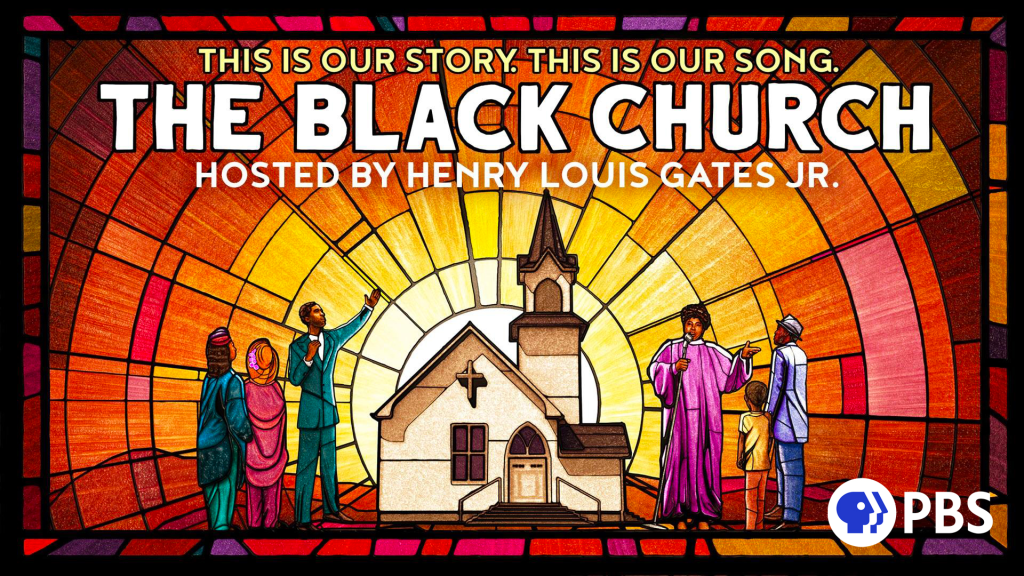
Today’s #BlackJoy moment we will focus on “The Black Church.”
“Amazing Grace, how sweet the sound. That saved a wretch like me.” The sweet sounds of the spiritual song, Amazing Grace, and other hymns are the staple of most Black churches in America. These hymns hold deep meaning and significance within the context of the Black church. They are not merely songs, but powerful expressions of faith, resilience, and hope. These hymns have been passed down through generations, carrying the collective experiences, struggles, and triumphs of African Americans.
Hymns are just one aspect that shapes what the Black church is today. A closer look at history reveals that Black churches were birthed during times of oppression and adversity, and provided a sanctuary for African Americans to gather, worship, and find solace. And for at least two hours on Sunday mornings, Blacks can be free and liberated from societal ills. And today, the same rings true. “The Black Church” has been a place where individuals can express their spirituality freely, connect with a higher power, and find comfort in a community that understands their struggles; all while wearing their “Sunday Best” attire. Predominantly Black churches continue to progressively lead the charge for several causes: spirituality, activism, and leadership.
Weekly powerful sermons by the pastor, moving songs of praise and worship by the choir, and soul-moving prayers by church leaders help to shape and deepen the spiritual growth and development of parishioners. Outside of the four walls of the church, many Black churches have been instrumental in advocating for social justice and working together to address societal issues that impact Black communities: healthcare, poverty, and education; to name a few. The Black church embodies JOY because it’s a space that offers strength, hope, belonging, resilience, and an opportunity to engage in vibrant worship, celebration, and praise!
I would like to shout out two churches that have played an integral role in my spiritual growth and development: Faith Temple Church of God in Christ (COGIC) in Wilmington, NC (my home church) and Cedar Street Baptist Church of God in Richmond, VA (my local church). Thank you to Pastor Lorenzo Edge and Dr. Anthony Michael Chandler, Sr. for your spirit-filled sermons, service to the church and community, and for creating opportunities for me to develop as a leader within and outside the church!
Want to learn more about the Black church? Check out these phenomenal documentaries and articles that highlight the historical foundations of the Black church and their relevance today:
You can also check out some of these top Gospel hits in the playlists below!
“Nothing is more powerful than the Black church experience. A good choir and a good sermon in the black church, it’s pretty hard not to be moved and be transported.” ~Barack Obama
I am truly a sucker for a good book. Getting caught up in a good book definitely brings me much joy!! Books on top of Books, this is definitely something that you will not see a shortage of whether in my home or office. Black joy is not limited to one idea, much like reading diversely is not limited to one genre of interest.
Thus, today’s #BlackJoy moment is all about celebrating Black literary work that encompasses Pride, Juneteenth, and Summer Solstice! Along with my monthly book recommendation list, I am including books that exude and channel Black Joy!!
The Catch Me If You Can: One Woman’s Journey to Every Country in the World ~Jessica Nabongo
It’s Not All Downhill From Here ~Terry McMillan
Open Water~Caleb Azumah Nelson
Who Will You Be?by Andrea Pippins
Friday I’m in Love ~Camryn Garrett
A Lowcountry Bride~Preslaysa Williams
You So Black by Theresa tha S.O.N.G.B.I.R.D
A Garden of Black Joy: Global Poetry from the Edges of Liberation and Living ~Black Table Arts
Meals, Music and Muses: Recipes from My African American Kitchen ~Alexander Smalls
——-
Dr. G’s Monthly Book Recommendations-June Edition
Jubilee ~Margaret Walker
Power & Magic The Queer Witch Comics Anthology~Edited by Joamette Gil
Black Queer Freedom : Spaces of Injury and Paths of Desire ~GerShun Avilez
Palmares by Gayl Jones
Light for the World to See: A Thousand Words on Race and Hope ~Kwame Alexander
Charming As a Verb ~Ben Philippe
The Brightest Day: A Juneteenth Historical Romance Anthology ~Kianna Alexander, Alyssa Cole, Lena Hart, & Piper Huguley
Beasts of Prey& Beasts of Ruin ~Ayana Gray
Happy Pride Month!! Happy Juneteenth!! and Happy Summer Solstice!!
By sharing these lists I hope they bring you much joy as you read them and please feel free to share these awesome literary treats/books by Black authors with your friends and family!!
And remember you can always go back and check out the previous month’s list and past recommendations in the “Resource” section of the website!!
“Never be afraid to sit a while and think.” ~Lorraine Hansberry
Just wanted to re-share a past discussion I had with one of my friends and colleagues Kaniqua Robinson on the history and contemporary relevance of the Juneteenth holiday as a curated expression of Black joy and agency.
The message then is still very much relevant today!!















 Black Future Feminist