Posted in On the Desk..., On The Radar

AAIHS 2023 Conference Call for Papers

The African American Intellectual History Society (AAIHS)’s Eighth Annual Conference*

Conference Theme: “We Can’t Breathe”: Crisis, Catastrophe and
Sustaining Community in (Un)livable Spaces

Hosted by University of North Carolina, CharlotteMarch 9-11, 2023 

Black people can’t breathe. This is because these are crisis ridden times. Crisis and catastrophe wrought by mass incarceration, inadequate housing, climate change, environmental degradation, police brutality, war and the stress upon our everyday lives. Historically, Black communities globally have been made subject to horrific circumstances from involuntary migration, to enforced servitude, Jim Crow segregation, mass incarceration, police brutality and now coupled with a pandemic and climate change. This is as juxtaposed with a multiplicity of environmental conditions including inadequate access to healthy food, toxic waste, unclean water and pollution. Black communities have disproportionately experienced the impact of environmental waste, pollution, climate change and lack of access to healthy food resources and equitable healthcare services. This has also more recently meant involuntary migration illustrated with the rise of Black climate refugees worldwide. Statistics indicate that Black people in the U.S. are 75 percent more likely to live close to oil and gas refineries, have disproportionately high rates of asthma, due to environmental factors, and are more frequently made subject to pollution and toxic waste. Our conference this year specifically focuses on the theme of crisis, catastrophe and sustaining community. We are particularly interested here in the ways that the Black community has responded to these circumstances over time in thought and action.

This conference seeks to bring together scholars, activists, public intellectuals and community stakeholders interested in presenting on the theme of crisis, catastrophe and sustaining community in relation to the history and culture of African Diaspora communities. 

Papers related to (but not limited to) these topics might be ideal:

  • Abolitionism (then and now)
  • Enslavement and Everyday Resistance
  • Mass Incarceration
  • Education Pedagogies and Resistance
  • Housing and Homelessness
  • Rent Exploitation and the Housing Crisis
  • Health disparities over time and space
  • Healthy Food Cooperatives and Programs
  • Food deserts and Black Mobilization
  • Clean Water Actions
  • Police Brutality and Black Resistance
  • Black Women and the Global Green Movement
  • Black Children and Environmentalism
  • Black Women and Eco-feminist Praxis

For more information and submission guidelines, please click here !!

Deadline for submissions is August 1st, 2022

Conference Committee:

Co-Chairs: LaShawn Harris, Michigan State University and Oscar de la Torre, UNC-Charlotte

Tyler Parry, University of Nevada, Los Vegas
Adam McNeil, Rutgers University
Grace D. Gipson, Virginia Commonwealth University
Crystal Eddins, University of North Carolina, Charlotte

For more information write to the committee at: conference@aaihs.org

Note: The goal is to have an in-person conference but this is subject to change given the current pandemic. Hybrid options may be available as we are an organization that does take seriously inclusivity of all interested in participating in this timely event. Masks will be required and proof of vaccination or a negative COVID test (24 hours before attending) must be provided to the organization before attending.

*Repost from AAIHS
Photo by Pixabay on Pexels.com
Posted in On The Radar, Resources

Call For Papers-AAIHS 2022 Conference

**REPOST FROM AAIHS SITE**

The African American Intellectual History Society (AAIHS)’s

Seventh Annual Conference

Everyday Practices, Memory Making, and Local Spaces

March 11-12, 2022 

A Virtual Conference 
Host: University of Nevada, Las Vegas 
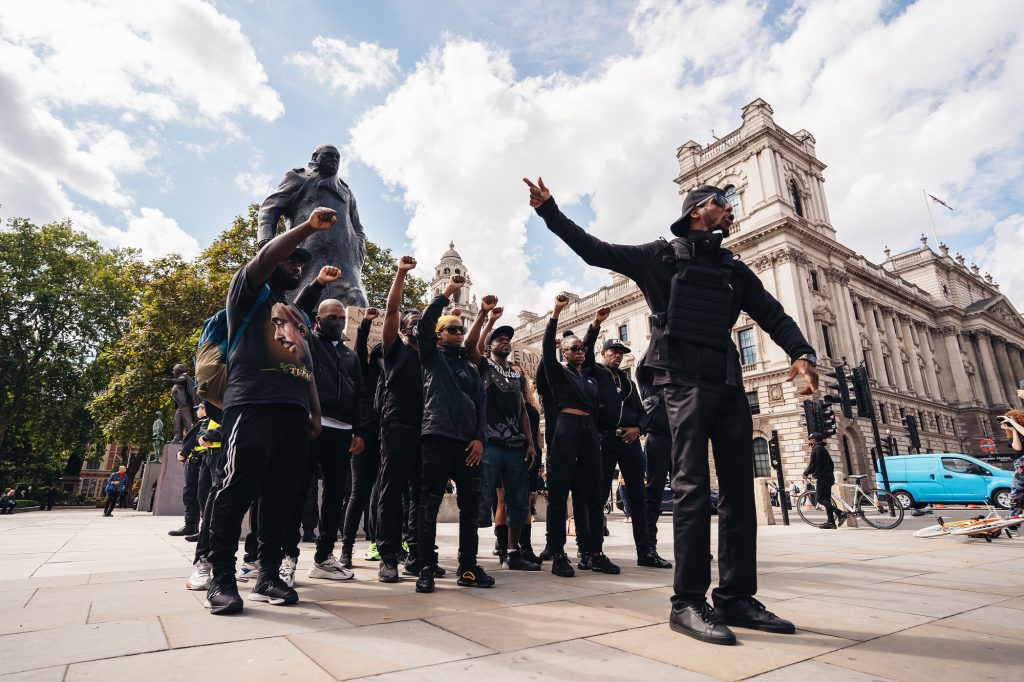
Group of Black Lives Matters protesters in front of Sir Winston Churchill Monument statue in London (Sandor Szmutko / Shutterstock.com)

The process of “memory making” is ongoing as activists throughout the African diaspora confront the past and challenge landscapes that pay homage to colonialism and Eurocentrism. Recent debates surrounding the teaching of Critical Race Theory in K-12 classrooms, The 1619 Project, and the position of Confederate monuments in the public square highlight these contemporary trends. The United States is facing a unique moment of national reckoning that scrutinizes how history is interpreted, commemorated, and displayed. 

In the era of social media, local issues can also have immediate global implications. When Minneapolis police officer Derek Chauvin murdered George Floyd in the Summer of 2020, protests emerged in cities and towns throughout the United States. But calls for justice and civil rights quickly spread across the globe, as communities throughout Europe, Asia, Africa, Australia, and the Americas condemned anti-Blackness, police brutality, and systemic racism in their own countries. Relatedly, as activists in the United States toppled Confederate monuments and statues of Christopher Columbus last year, people of African descent in Europe also challenged the colonial landscapes displayed in various European cities. In Bristol, for example, activists defaced and destroyed the statues of slave traders such as Edward Colston and in Belgium, activists toppled statues of brutal imperialists such as Leopold II. These national and global activist movements contested the aftermath of enslavement and colonialism in the everyday while also illustrating how memory shapes politics, identities, and communities in the past and present.  

In accordance with this contemporary moment, this year’s theme, “Everyday Practices, Memory Making, and Local Spaces” provides an opportunity for interdisciplinary scholarship that examines how history is told in local, national, and international contexts. Correspondingly, AAIHS has selected Las Vegas, Nevada, for its annual conference. The city’s African American residents are deeply tied to national, international, and local histories. As southern Nevada’s Black population grew through the Great Migration, civil rights activists fought against the city’s rampant inequality, culminating in the “Moulin Rouge Agreement” on March 26, 1960, that desegregated the Strip casinos. And as an international tourism hub, spaces throughout southern Nevada have been shaped and reshaped by transnational influences. 

As panelists consider their proposals, they might consider the following questions: How do “everyday practices” form conceptions of the past? How is memory “made” and “remade” in different eras of history? How can “local spaces” influence broader discussions of societal injustice and prompt calls for social change? What methods have people from past and present generations used in their “memory making” and why did they use those methods? In what way does gender, sexuality, race, and class complicate memory making in everyday locales? Ultimately, what are the stakes of challenging memorialized and deeply invested in spaces and stories in local, national, and international settings?

AAIHS welcomes individual proposals for abbreviated presentations (5-6 minutes) that consider the theme of “Everyday Practices, Memory Making, and Local Spaces” from a variety of perspectives. Each proposal will be considered for inclusion in one of the featured conference sessions, which will be scheduled remotely on Friday, March 11 or Saturday, March 12, 2022. AAIHS invites scholars at various ranks and affiliations (from graduate students to senior faculty and independent scholars) to submit proposals for consideration. Each proposal should include a title and approximately 500 words that clearly explains the paper’s argument; methods and methodologies; interventions; and engagement with the conference theme. Submissions should also include a short CV (1-3 pages in length), highlighting previous publications and presentations, if applicable. Proposals will be accepted on the AAIHS website between September 15, 2021 and November 15, 2021. 

To Submit a Conference Proposal, click here!!

Conference Planning Committee:

  • Chair: Tyler D. ParryUniversity of Nevada, Las Vegas
  • Hilary N. GreenUniversity of Alabama
  • Tiffany N. FlorvilUniversity of New Mexico 
  • Candace CunninghamFlorida Atlantic University 
  • Adam McNeilRutgers University, New Brunswick

*Please email conference@aaihs.org to reach the conference committee.

Posted in On The Radar

Calling All Comic Book Creatives and Fans!! “2021 WinC Creative Conference”

Check out this great professional networking opportunity, put on by the Women in Comics Collective International (WinC), to connect with like-minded folks in the comic book community.

The event will take place Thursday July 22nd, 2021 at 12:00 PM/ET!! See more about the event below:

“WinC Creative”, aka WCC, is our new virtual professional event experience! The conference serves to support the professional comic book community with programming directly addressing their needs via professional, educational & wellness workshops!

This one day conference will serve to support the professional comic book community with programming directly addressing their needs via:
  • Professional development panel(s)
  • An industry symposium
  • Wellness workshops

WCC will also have vendors, courtesy of our new “Artist Alley 365” (Debuting in July!) Admission will be Free for WinC members and $3-$6 for non-members.

For more information on Women in Comics Collective International (WinC) and to purchase tickets* see here!!

*All Attendees will receive a Virtual Swag Bag to download Books, Discount Services and More!