Posted in Feature Spotlight

Feature Spotlight

“The only way you really see change is by helping create it.” ~Lena Waithe

Today’s post is all about creating that change through featuring up and coming talent, especially young Black talent! Just in the same way that many of my teachers and mentors guided and assisted in my journey, it is my duty to do the same. If it was not for my community, I would not be the person I am today. I remember back in high school I use to tell myself, whenever I got the opportunity to reach back and guide the next future leaders I would jump at the opportunity. Thus, it is very important to guide and recognize, but also create a space and a platform to feature these talents.

So it is with great excitement that I am able to share with you the newest member to the Black Future Feminist team, Jaya Robinson! Jaya is a sophomore in high school, a published author, and a budding pop culture commentator!! Plus, like me she is also a fan of comic books and film!!

And on a monthly basis, Black Future Feminist followers will get to check out featured pop culture commentary on a variety of Blockbuster films, new television series, comic books, manga, and so much more. Today’s featured content, takes a look at the 2008 Marvel Comics action film, Iron Man starring Robert Downey Jr. and its overall impact on pop culture.

Iron Man and Its Impact on Pop Culture” ~Jaya Robinson

Like many people, 2008’s Iron Man was my first introduction to big popular comic book movies. Before that time, there were superhero movies such as the Warner Bros. Batman film franchise, (Michael Keaton, Val Kilmer, and George Clooney), and even before that the Superman movie franchise, however no movie franchise was what Marvel was bound to become. Prior to Iron Man, only a selected few (mainly comic book fans/readers) knew about the “Iron Man” character. Even those who were familiar with from the comics, they did not necessarily relate to the character. However, this movie created a lane that made it possible to relate to Tony Stark. It made an otherwise un-relatable billionaire, playboy philanthropist…human. Iron Man, as a film, not only launched Marvel Comics into mainstream media and pop culture, but it also changed how superheroes were approached in blockbuster movies. Additionally, Iron Man played a fundamental role in the launching other comic book movies and future blockbusters. Without Iron Man, current comic book based movies would not be the same. Iron Man humanized the characters it brought from the page and showed them in a way audiences had never seen before. It is important to note, that superheroes have always been an important part of pop culture. Before there were superhero TV shows, we had comic books. As an added bonus, what made this movie so special was that they were able to take inspiration directly from the pages of the comic book that people grew up with and transform it to the big screen. 

Now what made this movie so different from other comic book movies of the time was its realness and grit. This movie did not shy away from Tony Stark’s flaws (such as his struggle with alcohol addiction), but embraced them and showed them in a new light. Iron Man not only reached people who enjoyed comic books, but also people who just enjoyed movies. 

Iron Man bridged the gap between the comic book genre and the regular film genre. It is one of the reasons why Iron Man was so good for the time. The cinematography as well as the plot and storyline proved to be good enough to break the label of being a stereotypical “comic book” movie. In some cases, comic book movies focused on the superhero and not the character itself. Iron Man moved away from that formula and essentially laid the groundwork for future comic book movies. It essentially became the blueprint. This movie sparked the start of not only the Marvel franchise, but other comic book movies outside of the Marvel Cinematic Universe. Iron Man, as a film, also played a role in signaling other comic books to move into the mainstream media. One might also argue that it sparked an added interest in comic books, in general. Because of its commercial success, people began to take an active interest in Tony Stark’s complete background and origin.

All in all, Marvel would set its wheels in motion with the Iron Man film while making a further mark in the comic book medium and securing a place within pop culture. In the end, Iron Man proved skeptics wrong, and showed how superhero movies did not always have to be a superhero vs. alien threat, but could also be superhero vs. self. Iron Man showed that superhero movies can incorporate an intimate and relatable narrative, because at the end of the day Iron Man is still a man behind all of the armor.
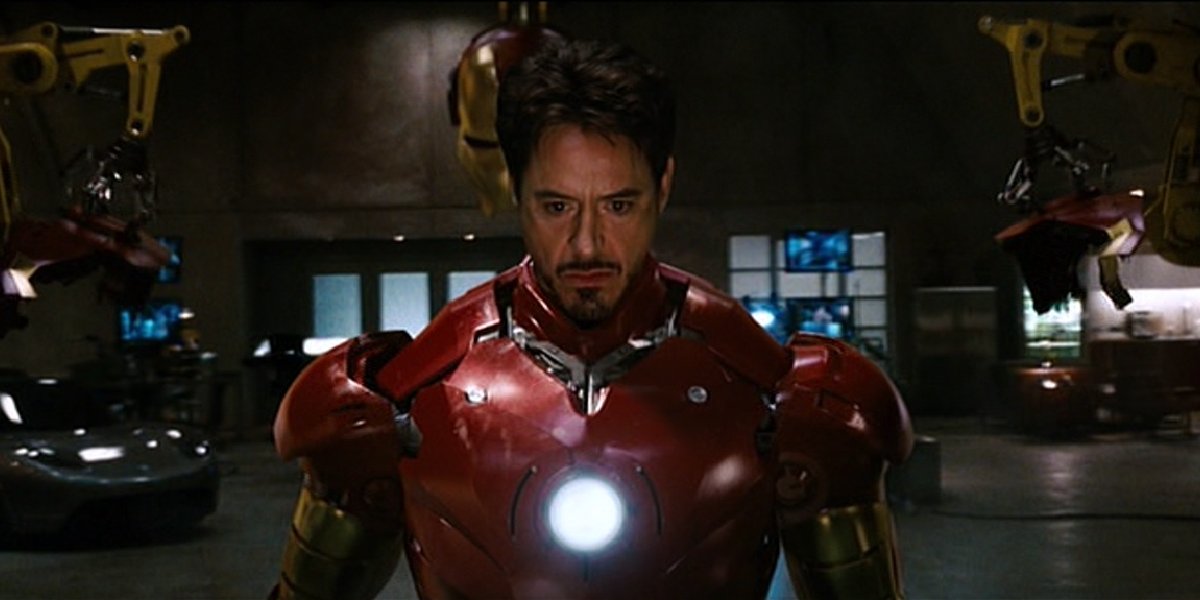
Image result for iron man
Tony Stark as “Iron Man”
Posted in Resources

Let’s Talk About Race-Black Lives Matter

Previously Posted on Happy Mama Happy Mini (June 2020)

Over the past few months, we have been struggling through a global pandemic—one that has disproportionately affected Black and Brown communities—while also trying to find some sense of comfort and happiness. However, we as country and even the world have recently witnessed a national outpouring of anger, frustration, passion, and protests in response to the ongoing pain of racial injustice and police brutality. With the recent national attention regarding the killings of Breonna Taylor, Ahmaud Arbery, and George Floyd, it is essential to create dialogues about these events and how we make meaning of them to invest in a better society. 

As stated by Black feminist and civil rights activist Audre Lorde, “It is not our differences that divide us. It is our inability to recognize, accept, and celebrate those differences.” Thus, as we continue to have discussion in our schools, churches, community events, and our homes it is important that we engage in these differences, while simultaneously equipping ourselves and others. Having the knowledge can lead to fruitful conversation and some sort of change. 

This knowledge can be found in a variety of resources, tools, books, films/documentaries, and community efforts. 

Below you will see a guide that seeks to equip us with the knowledge in hopes to bring about change: 

Multimedia

Graphic Novels/YA/Children’s Books

  • Dear Martin (2017) ~Nic Stone
  • The Poet X (2018) ~Elizabeth Acevedo
  • Bayou (2009) ~Jeremy Love
  • Something Happened in Our Town: A Child’s Story About Racial Injustice (2018) ~Marianne Celano, Marietta Collins,and Ann Hazzard
  • Saturday (2019) ~Oge Mara
  • The Youngest Marcher: The Story of Audrey Faye Hendricks, a Young Civil Rights Activist (2017) ~Cynthia Levinson
  • Each Kindness (2012) ~Jacqueline Woodson
  • “Resist: 35 Profiles of Ordinary People Who Rose Up Against Tyranny and Injustice” (2018) ~Veronica Chambers
  • Stamped: Racism, Antiracism, and You (2020) ~Jason Reynolds & Ibram X. Kendi
  • Parable of the Sower: A Graphic Novel Adaptation (2020) ~Damian Duffy & John Jennings
  • March [Trilogy] (2016) ~John Lewis, Andrew Aydin, Nate Powell
  • The Hate U Give (2017) ~Angie Thomas
  • ‘Still I Rise: A Graphic History of African Americans’ ~Roland Laird w/Taneshia Nash
  • Skin Like Mine (2016) ~LaTashia M. Perry
  • I Am Enough (2018) ~Grace Byers
  • Hair Love (2019) ~Matthew Cherry
  • Little Leaders: Bold Women in Black History (2017) & Little Legends: Exceptional Men in Black History (2019) ~Vashti Harrison

Films/Documentaries

  • I Am Not Your Negro (2016)
  • Race (2016)
  • Do the Right Thing (1989)
  • Fruitvale Station (2013)
  • If Beale Street Could Talk (2018)
  • Selma (2014)
  • The Hate You Give (2018)
  • Pariah (2011)
  • Get Out (2017)
  • Say Her Name: The Life and Death of Sandra Bland (2018)
  • Dear White People [Film (2014) & Netflix series (2017-2021)]
  • 13th (2016) [Netflix]
  • When They See Us (2019) [Netflix]
  • Seven Seconds (2018) [Netflix]
  • Time: The Kalief Browder Story [Netflix]
  • See You Yesterday (2019) [Netflix]

Books

  • White Rage: The Unspoken Truth of Our Racial Divide (2016) ~Carol Anderson
  • How to Be An Antiracist (2019) ~Ibram X. Kendi
  • Pushout: The Criminalization of Black Girls in Schools (2018) ~Monique Morris
  • From #BlackLivesMatter to Black Liberation (2016) ~Keeanga-Yamahtta Taylor
  • Between the World and Me (2015) ~Ta-Nehisi Coates
  • So you want talk about race (2019) ~Ijeoma Oluo
  • White Fragility: Why it’s so hard for white people to talk about racism (2018) ~Robin Diangelo
  • Why Are All the Black Kids Sitting Together in the Cafeteria?: And Other Conversations About Race (2017) ~Beverly D. Tatum
  • The New Jim Crow: Mass Incarceration in the age of Colorblindness (2020) ~Michelle Alexander
  • Parable of the Sower (1993) ~Octavia E. Butler  
  • ‘Choke Hold’: Policing Black Men (2018) ~Paul Butler
  • Citizen: An American Lyric (2014) ~Claudia Rankine
  • Bad Feminist (2014 ) ~Roxane Gay
  • Heavy: An American Memoir (2019) ~Kiese Laymon
  • Racism Without Racists: Color-blind racism and the persistence of Racial Inequality in America (2017) ~Eduardo Bonilla-Silva
  • The Color of Law: A Forgotten History of How Our Government Segregated America (2018) ~Richard Rothstein
  • No Ashes in the Fire (2019) ~Darnell L. Moore
  • ‘When They Call You a Terrorist: A Black Lives Matter Memoir’ (2020) ~Patrisse Khan-Cullors and Asha Bandele
  • ‘Eloquent Rage: A Black Feminist Discovers Her Superpower’ (2019) ~Brittney Cooper
  • ‘Algorithms of Oppression: How Search Engines Reinforce Racism’ (2018) ~Safiya Umoja Noble

This is not an end all, be all list, but meant to ignite and continue dialogues that can be difficult, but are very necessary. Hopefully, this list will also lead to the creation of building other resource guides that can be used in the fight against anti-Blackness and anti-racism. 

“We who believe in freedom cannot rest until it comes.” ~Ella Baker