So a couple a weeks ago I had the opportunity to offer a few of my thoughts about Asian representation in comic books and its relationship with the latest Marvel film, Shang-Chi andThe Legend of the Ten Rings for CNN Entertainment!! To view the complete article see here.
Check out some of the snippets below:
Shang-Chi’s early issues relied on some problematic stereotypes
Every iteration of Shang-Chi has a similar throughline: He’s always a spectacular martial artist, always playing tug-of-war with his former life as a fighter and always, always tormented by daddy issues. That blueprint was created by Englehart and Jim Starlin, the two-man team who brought the character to life (Englehart, perhaps best known for his dark, noir take on Batman, has also created characters like Star-Lord of “Guardians of the Galaxy,” and Starlin is responsible for MCU icons like its biggest villain, Thanos.)
In the early 1970s, Englehart and Starlin approached Detective Comics (DC) with an idea: a comic book take on the David Carradine series “Kung Fu.” (The series has been criticized for its use of “yellowface,” or casting White actors as Asian characters. Carradine is White but starred as a part-Chinese martial artist.)Starlin, an artist, loved the martial arts element of the story, while writer Englehart said he was interested in delving into Taoism and other philosophies to flesh out his protagonist. The two thought they’d found a match with “Kung Fu” — but DC thought the “kung fu craze was going to disappear,” Starlin said, and passed on the idea.
So the pair took it next to Marvel, whose executives agreed only after insisting that the pair inject some pre-existing intellectual property into their comic, both men told CNN.
In this case, the company had the rights to the character Fu Manchu, a racist caricature of a Chinese man created by British author Sax Rohmer in the early 20th century. The villain was then “grafted onto the series” as Shang-Chi’s father, Starlin told CNN in an August interview. (Racist depictions of Asian characters had appeared in comics before this, like the egg-shaped villain “Egg Fu” in a 1965 Wonder Woman issue and the 1940 character “Ebony White” in the early comic, “The Spirit,” said Grace Gipson, an assistant professor at Virginia Commonwealth University who studies race and gender within comics.)
Gipson, a pop culture scholar who studies race and gender within comics, said hiring writers of color like Yang to helm series about characters of color is an improvement, but it “is really not a hard task.” She said while comics creators have made great strides in deconstructing norms of who a comic book reader is and what storylines they want to see, the hiring of creators of color needs to happen consistently.”It’s about making sure the voices of those being represented always have a seat at the table as well as a microphone to speak,” she told CNN.
Still, she said, as a fan of comics herself, she’s enjoyed seeing more representative stories being told in mainstream comics.
So your girl got a chance to share a few of her comic book faves with the Chicago Humanities Festival! Always love the chance to geek out and share!! Check it out below!!
After the program, we spoke to Dr. Gipson about some of her favorite comic book series, characters, and authors.
CHF: In your CHF program, you mentioned comic books and characters (like Dark Horse’s Martha Washington, who grew up in Chicago). Can you talk a little bit more about the history and significance of some of your favorite series, characters, and authors?
1) Storm (X-Men, Marvel Comics)
Gipson: When it comes to selecting my favorite comic book characters, I have a pretty solid line-up. While my introduction into comics was through the funny papers, there would be one character that truly drew me into the genre: Marvel Comics’s Storm from the X-Men.
As a Black woman who not only served as a leader of the X-Men, but also a goddess that controlled the weather elements, Storm as a fictional character provided an example of progressive representation and a fantastical escape.
Her presence in the comic book world made a significant impression on me as a young, Black girl from the Midwest. I was able to see myself, at the center and not on the fringes, within this popular medium that had been dominated primarily by white and male characters. Storm also opened the door for me to discover more Black female characters, as well as Black female comic book writers and artists.
2) Martha Washington (Dark Horse Comics)
Gipson: Another character who would have a significant impact on me personally and professionally is that of Dark Horse Comics’s Martha Washington. Created in the early 1990s, Martha Washington resonated with me in a very close way, considering her character was based in Chicago, IL. As a Champaign, IL native her story literally and figuratively felt close to home.
Martha Washington’s narrative as explored through The Life and Times of Martha Washington in the Twenty-First Century comic book series sought to showcase a “regular” relatable character that, despite her circumstances, becomes a heroine for her local community and ultimately the world.
Set in the urban space of the Cabrini-Green projects, Martha Washington’s beginnings (which are told in the first issue Give Me Liberty) explore, from a dystopian perspective, a current and relevant story of public housing, crime, poverty, Black youth, adulthood, womanhood, and even patriotism. Uniquely, her story offers a rare opportunity to explore American patriotism from a Black woman’s point of view. This is especially noteworthy considering the lack of Black female leads in comics, during the 1990s.
When it comes to comics, one can never underestimate the power of a diverse story and the impact it can have on all types of readers. These next two characters not only contribute diverse storylines but also have the impact of reaching a young audience. When looking at the landscape of comic book characters, most of them are adults, so it is refreshing to see a Black female youth presence.
3) Raquel “Rocket” Ervin (Milestone Comics)
Gipson: Raquel “Rocket” Ervin from Milestone Comics (a Black publishing company) is one of the earliest examples of a Black teen character that I have encountered. Also, Rocket’s storyline is one of the first comics to deal with complex and practical issues such as teen pregnancy, balancing motherhood, Black mentorship, and community access. And it was done in a way that avoided stereotypes, while providing hope.
As a character influenced by notable figures like Toni Morrison and W.E.B. Du Bois, Rocket provides an existing reality and a story of dedication and perseverance. Although she is deemed as a superhero, for Rocket her true superpower and strength is her ability to inspire.
4) RiRi “Ironheart” Williams (Marvel Comics)
Gipson: Another character that humanizes the Black girl experience is that of Marvel Comics RiRi “Ironheart” Williams. Through RiRi/Ironheart, as a fictional character, she personifies what it means to be a young, gifted, Black teen in today’s society. Her character also shares another look into the STEM world by encouraging Black girls to embrace one’s giftedness and intelligence.
This is a comic that I wish existed when I was a teenager, but nonetheless grateful that young Black girls and the world are able to appreciate it now. What is also significant about the Ironheart story is that it is written by a Black woman and Chicago-native, Eve L. Ewing, this is key as most stories in past comic book history have been written and drawn by white men (thankfully there is a growing landscape of representation).
To know that I am represented on the page and behind the panel inspires and further confirms that Black women and girls deserve to take up space in this popular medium. Ultimately, both Rocket and Ironheart are perfect examples of how comics can rewrite the script regarding Black girlhood and the importance of why “Representation Matters!!”
5) Torchy Brown (created by Jackie Ormes)
Gipson: Lastly, I felt it was important to not just recognize the importance of some of my favorite characters, but also one of my favorite writers/artists. Before there was even a Storm, Martha Washington, Rocket, or Ironheart there was a Black female lead named Torchy Brown created by cartoonist and writer Jackie Ormes. Similar to the Martha Washington character, Jackie Ormes legacy and work would find a home in Chicago.
As the first Black female cartoonist, Ormes was instrumental in resetting the standard in cartooning and comic strips. She did this by creating her own lane of telling stories that primarily featured Black voices, while also challenging the stereotypes and caricatures often presented in mainstream press. With readers from coast-to-coast, Ormes used her comic strip series and panels to discuss unapologetic commentary on such issues as racism, labor and taxes, U.S. Foreign policy, violence against women, unfair housing, segregated schools, and environmental injustice. She was able to use her talents to not only inform but also showcase (while entertain), in full color, the existence of intelligent, stylish and fashionable Black characters (particularly Black women). With Chicago as an honorary character, much of Ormes cartoon and comic strip work mirrored her real life as she was a community advocate and mentor, fundraiser, and trendsetter.
(Snapshot of a few of my faves!! Image Credit: Grace D. Gipson)
“A challenged world is an alert world. And from challenge comes change.”… #IWD2021 #March8 #Proud2Be #GoGirl #TheWondersOfAWoman #GirlPower #WomanPower #BlackFutureFeminist
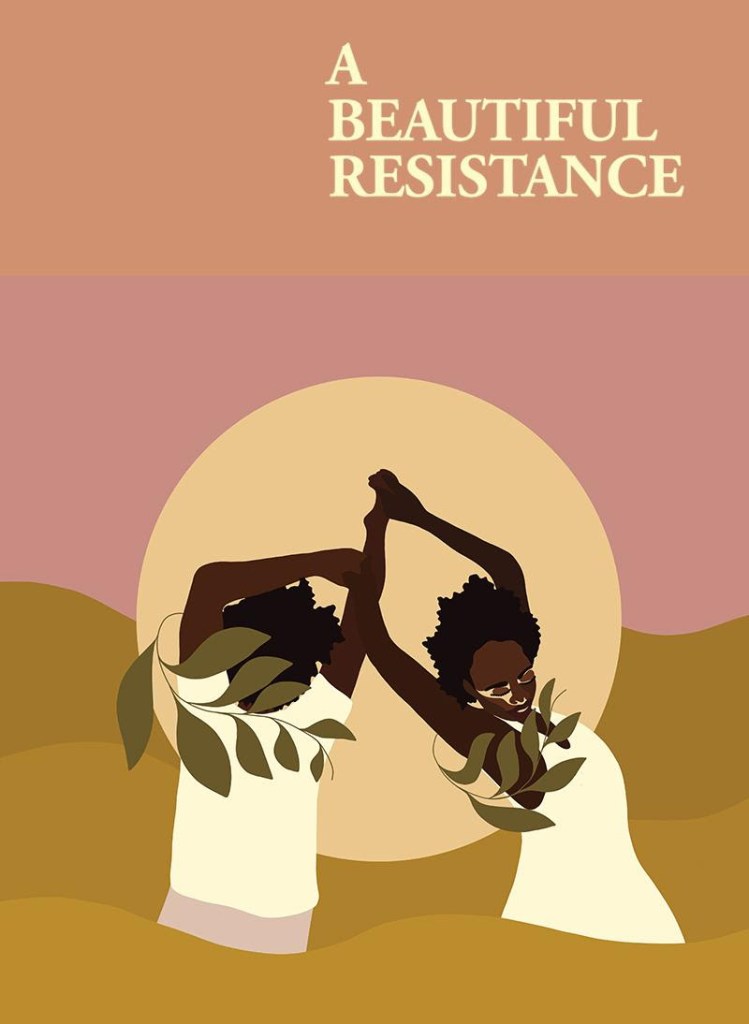
As we usher in a new administration and a new year, for Black folks in particular, it is important that we celebrate the wins, begin to heal from past traumas, acknowledge and fight the injustices but also not let them define us. As someone who teaches and engages with what is going on in society and the world (historically and culturally), it is important that we magnify our truths and avoid being pushed to the margins.A Beautiful Resistance does just that in a way that allows Black people and other people of color to tell their stories via a popular social media vehicle…Instagram!
Launched in November 2020, A Beautiful Resistanceis a digital episodic series sponsored by The Boston Globe and led by cultural columnist Jeneé Osterheldt. Described as a series that “amplifies the truths of Black folk and other people of color living as their fullest selves in a region, in a country, set up to keep them from doing just that. Their joy is a form of resistance.”
We are more than police brutality and suffering. We can acknowledge injustice without being defined that way. Blackness is not a burden. Here, we tell our stories and our struggles, too, through the lens of love. We amplify the truths of Black folk and other people of color living as their fullest selves in a region, in a country, set up to keep them from doing just that. Their joy is a form of resistance.
Watching many of these episodes is actually very encouraging and therapeutic! To watch the various stories being told, achievements recognized, and gain exposure to numerous Black creatives is quite timely and much needed.
To take a brief look at some of folks who are highlighted check out the trailer below:
When it is all said and done how do you use joy as resistance?
To Be Young Gifted and Black: Finding Black Excellence in “The Hill We Climb”
Sweet Baby Jesus!! Today (and yesterday) we witnessed #BlackExcellence and #Herstory in multiple ways, from the swearing in of Madame Vice President Kamala V. Harris, to the inspiring benediction by Rev. Dr. Silvester Beaman, to the full display of Black fashion (Pyer Moss, Christopher John Rogers, Sergio Hudson), to the powerful and poignant National Youth Poet Laureate Amanda Gorman !! My cup runneth over and I was filled with pure joy and happiness.
However, one moment in particular that stood out for me was witnessing 22-year old Amanda Gorman recite her poem The Hill We Climb on the Capitol steps this morning! Gorman’s poem was more than just words on a paper, but a call to the past, a moment to reflect, a call to action, and a space to inspire. Glowing and shining like the North Star, Gorman stunned audiences with her long yellow coat and crisp white shirt, with a ruby red headband atop her braids … listening to her reminded me of watching Maya Angelou share her poem On the Pulse of Morningat President Bill Clinton’s 1992 inauguration.
“Now we assert: How could catastrophe possibly prevail over us?“
Gorman’s words, poise, and presentation inspired me as a fellow Black woman and it is my hope and prayer that her action and representation inspires not only young girls, but women of all ages to make their voices heard!
National Youth Poet Laureate Amanda Gorman delivering her poem “The Hill We Climb” during the Biden-Harris Inauguration on January 20th, 2021
Everything about this occasion reads dignified, graceful, and refreshing! She had such a natural flow…literally and physically! Gorman’s eloquent moment in so many ways channeled the legacies of Shirley Chisholm, Maya Angelou, Ella Baker, Toni Morrison, and Fannie Lou Hamer!! The foundations they established laid the groundwork for a young Black woman like Amanda Gorman. Ahhhh they would be so proud! The acknowledgement of this moment is essential and should not be forgotten, if anything we should continue to see more moments like this one!
Let me tell you the ancestors are truly smiling today!!
“For there is always light if only we’re brave enough to see it, If only we’re brave enough to be it.“
To see the full video and transcript, please see here!




 Black Future Feminist