In the spirit of Black History Month, I wanted to make sure I shared with my BFF family a great article in the “Washington Post” from a colleague/mentor Dr. Keisha Blain on the “Five Myths about Black History.”
Each February since 1976, Americans have celebrated Black History Month. Established by historian Carter G. Woodson as Negro History Week in 1926, the commemoration developed over 50 years until it became Black History Month to mark the contributions of Black people. Despite the significance of Black history, far too many Americans don’t grasp its centrality to U.S. history. This lack of knowledge helps spread myths about the Black past.
Dr. Keisha N. Blain is an associate professor of history at the University of Pittsburgh, is a co-editor of Made by History, The Washington Post’s daily section for historical analysis. She is a co-editor of “Four Hundred Souls: A Community History of African America, 1619-2019.“
Friends, just a couple reminders of Dr. G’s upcoming events:
[WILL BE RESCHEDULED] February 24th, 2021 (6:00pm/ET)-“Black History Month Discussion: The Black Family and its Representations, Identity, and Complexities” (Panelist)…Richmond Public Library System (Richmond, VA) [Register Here]
February 24th, 2021-“What’s Your RPG Fantasy?: Let’s Talk Blackness, Politics, and Gaming” (Virtual Lecture)… The New Commons Project-University of Maine Farmington (Farmington, ME)…[Watch Here]
Sometimes you just gotta go back and reflect on what made you who you are today!! Receiving one of the Champaign Urbana Schools Foundation Distinguished Alumni Awards for 2021 has really taken me down memory lane! Ahhh the good ol’ days!!
Here is a peek into some of my experiences growing up in Champaign, IL!!
Just in case you were not able to tune into the “Just Talk/Talk Just” panel discussion How Long Till Black Future Month: Honoring Black History, Cultivating Black Futures you can check it out below:
This was a great discussion and dialogue!! It was like good ol’ school conversation amongst colleagues and friends.
Ultimately a true pleasure to share the ‘digital stage’ with some great scholars (Rev. Melanie C. Jones, Rev. Dr. Sakena Young-Scaggs, De’Angelo Dia, and Sommer Jordan)!
“The only way you really see change is by helping create it.” ~Lena Waithe
Today’s post is all about creating that change through featuring up and coming talent, especially young Black talent! Just in the same way that many of my teachers and mentors guided and assisted in my journey, it is my duty to do the same. If it was not for my community, I would not be the person I am today. I remember back in high school I use to tell myself, whenever I got the opportunity to reach back and guide the next future leaders I would jump at the opportunity. Thus, it is very important to guide and recognize, but also create a space and a platform to feature these talents.
So it is with great excitement that I am able to share with you the newest member to the Black Future Feminist team, Jaya Robinson! Jaya is a sophomore in high school, a published author, and a budding pop culture commentator!! Plus, like me she is also a fan of comic books and film!!
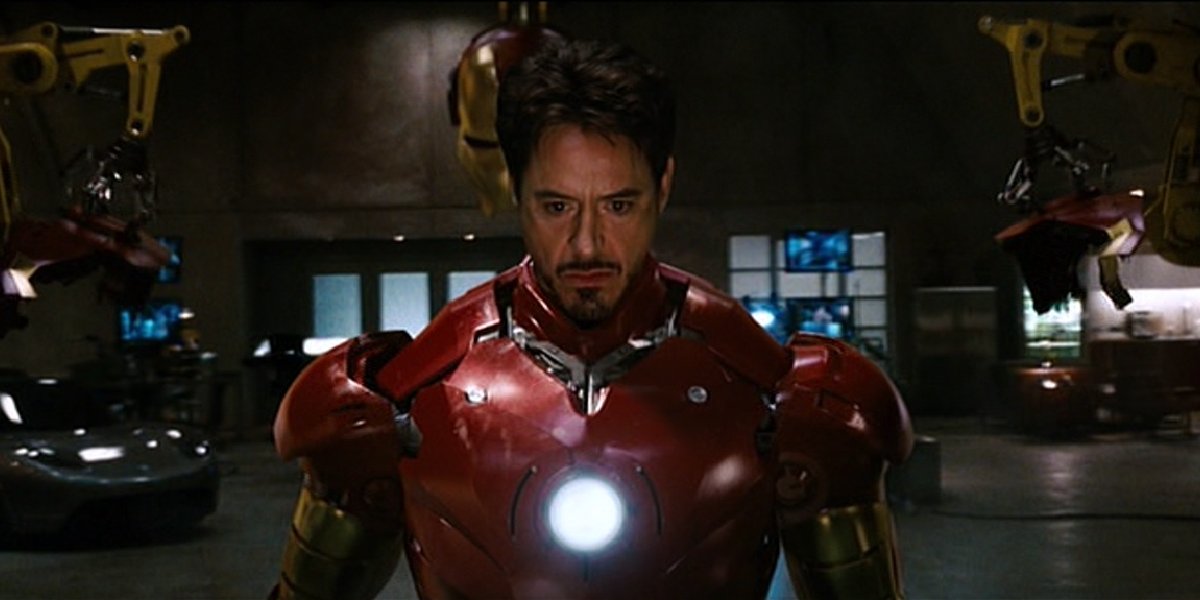
And on a monthly basis, Black Future Feminist followers will get to check out featured pop culture commentary on a variety of Blockbuster films, new television series, comic books, manga, and so much more. Today’s featured content, takes a look at the 2008 Marvel Comics action film, Iron Man starring Robert Downey Jr. and its overall impact on pop culture.
“Iron Man and Its Impact on Pop Culture” ~Jaya Robinson
Like many people, 2008’s Iron Man was my first introduction to big popular comic book movies. Before that time, there were superhero movies such as the Warner Bros. Batman film franchise, (Michael Keaton, Val Kilmer, and George Clooney), and even before that the Superman movie franchise, however no movie franchise was what Marvel was bound to become. Prior to Iron Man, only a selected few (mainly comic book fans/readers) knew about the “Iron Man” character. Even those who were familiar with from the comics, they did not necessarily relate to the character. However, this movie created a lane that made it possible to relate to Tony Stark. It made an otherwise un-relatable billionaire, playboy philanthropist…human. Iron Man, as a film, not only launched Marvel Comics into mainstream media and pop culture, but it also changed how superheroes were approached in blockbuster movies. Additionally, Iron Man played a fundamental role in the launching other comic book movies and future blockbusters. Without Iron Man, current comic book based movies would not be the same. Iron Man humanized the characters it brought from the page and showed them in a way audiences had never seen before. It is important to note, that superheroes have always been an important part of pop culture. Before there were superhero TV shows, we had comic books. As an added bonus, what made this movie so special was that they were able to take inspiration directly from the pages of the comic book that people grew up with and transform it to the big screen.
Now what made this movie so different from other comic book movies of the time was its realness and grit. This movie did not shy away from Tony Stark’s flaws (such as his struggle with alcohol addiction), but embraced them and showed them in a new light. Iron Man not only reached people who enjoyed comic books, but also people who just enjoyed movies.
Iron Man bridged the gap between the comic book genre and the regular film genre. It is one of the reasons why Iron Man was so good for the time. The cinematography as well as the plot and storyline proved to be good enough to break the label of being a stereotypical “comic book” movie. In some cases, comic book movies focused on the superhero and not the character itself. Iron Man moved away from that formula and essentially laid the groundwork for future comic book movies. It essentially became the blueprint. This movie sparked the start of not only the Marvel franchise, but other comic book movies outside of the Marvel Cinematic Universe. Iron Man, as a film, also played a role in signaling other comic books to move into the mainstream media. One might also argue that it sparked an added interest in comic books, in general. Because of its commercial success, people began to take an active interest in Tony Stark’s complete background and origin.
All in all, Marvel would set its wheels in motion with the Iron Man film while making a further mark in the comic book medium and securing a place within pop culture. In the end, Iron Man proved skeptics wrong, and showed how superhero movies did not always have to be a superhero vs. alien threat, but could also be superhero vs. self. Iron Man showed that superhero movies can incorporate an intimate and relatable narrative, because at the end of the day Iron Man is still a man behind all of the armor.







 Black Future Feminist